
Table of Contents
- What Gold Vermeil Is and How It's Made
- Gold Vermeil vs Gold-Filled Jewelry
- Gold Vermeil vs Solid Gold
- How Long Does Gold Vermeil Last
- How to Clean Gold Vermeil Jewelry
- Cost-Per-Wear and True Value
- Is Gold Vermeil Worth Buying for Your Lifestyle
- Frequently Asked Questions
Last Updated: October 11, 2026
What Gold Vermeil Is and How It's Made
Gold vermeil is a jewelry construction method where a thick layer of gold plating sits over a sterling silver base, and understanding gold vermeil jewelry worth helps you decide if it's right for your budget. The gold layer must be at least 2.5 microns thick to qualify as vermeil under U.S. standards, which distinguishes it from standard gold plating. This combination creates a piece that looks and feels luxurious while keeping costs significantly lower than solid gold.
The production process begins with sterling silver, which forms the foundation. A jeweler then electroplates a layer of gold onto this base using an electrical current. The thickness of that gold layer determines how long the piece will maintain its appearance.
What makes vermeil appealing is the balance it strikes. You get the aesthetic and feel of gold jewelry without the expense of solid gold throughout. At Omnia X, we've curated collections that showcase how vermeil construction delivers genuine quality at accessible prices.

Gold Vermeil vs Gold-Filled Jewelry
Gold-filled jewelry uses a mechanical bonding process rather than electroplating. A layer of gold is literally bonded to a base metal under heat and pressure, creating a thicker gold layer than vermeil typically offers. Gold-filled pieces usually have 5-10 times more gold by weight than vermeil.
The key difference lies in longevity and construction standards. Gold-filled jewelry lasts significantly longer because the gold layer is mechanically fused rather than electroplated. A gold-filled piece can last 10-30 years with normal wear, while vermeil typically lasts 1-3 years before the gold layer begins to wear through in high-friction areas like ring bands or bracelet clasps.
Understanding Vermeil Standards and Verification
Not all gold vermeil is created equal. U.S. Federal Trade Commission standards define vermeil as jewelry with a sterling silver base (92.5% pure silver) plated with gold at least 2.5 microns thick. The gold itself must be 10K or higher karat. However, these are minimum thresholds. Higher-quality vermeil often uses 14K or 18K gold plating and thicker layers (3-5 microns or more), which extends lifespan significantly.
When evaluating a vermeil piece, check the product description or hallmark for these markers:

- Sterling silver base: Look for "925" or "sterling silver" stamped on the piece. This confirms the base metal meets standards.
- Gold karat and thickness: Reputable sellers specify both. A description reading "14K gold vermeil, 2.5 microns" tells you exactly what you're buying. Vague language like "gold-plated" or "gold finish" without karat or thickness details suggests lower-quality plating.
- Manufacturer or jeweler name: Established jewelry makers stand behind their vermeil work. Unknown sellers with no verifiable history are riskier.
- Hallmarks: Physical pieces should bear stamps indicating karat (14K, 18K) and sterling (925). Absence of hallmarks is a red flag.
Gold-filled jewelry also has standards: it must contain at least 5% gold by weight, mechanically bonded to a base metal. Gold-filled pieces are typically stamped "GF" or "gold-filled" with the karat weight. The mechanical bond is visible under magnification as a distinct layer, whereas vermeil plating appears as a uniform surface.
Cost and Durability Trade-Off
Cost separates these options clearly. Gold-filled jewelry costs more than vermeil but less than solid gold. If you're choosing between them, consider how often you'll wear the piece and whether you'll commit to care. Daily-wear rings and bracelets benefit from gold-filled construction because the thicker gold layer withstands friction. Occasional pieces or statement necklaces work well in vermeil, provided you remove them before water exposure and store them properly.
The durability difference justifies the price gap: gold-filled pieces often outlast vermeil by 5-10 times, making them better for heirloom-quality jewelry or pieces you plan to wear for decades.
Gold Vermeil vs Solid Gold
Solid gold jewelry contains gold throughout the entire piece, typically 14K or 18K. This means the metal won't wear away or reveal another base metal underneath. Solid gold is the most durable option and lasts indefinitely with proper care.
The price difference is substantial. A solid gold ring costs 5-10 times more than an equivalent vermeil piece. For someone buying a first gold jewelry piece or testing a style, vermeil offers a way to experience gold jewelry without that investment level.
Vermeil's advantage is accessibility. You can own multiple pieces in different styles for the price of one solid gold item. This matters for gift-givers seeking variety without excessive spending, or for individuals updating their personal style with elegant pieces.
How Long Does Gold Vermeil Last
Durability and Expected Lifespan
Gold vermeil jewelry typically lasts 1-3 years with regular wear. This timeline assumes normal use and proper care. Pieces worn occasionally can last longer because the gold layer experiences less friction and exposure.

The lifespan varies significantly by wear location and lifestyle:
- Necklaces: 3-5 years with regular wear. Pendants worn over clothing experience minimal friction and often outlast other jewelry types. Chains worn against skin or under clothing wear faster at contact points.
- Earrings: 2-4 years. Studs last longer than dangling styles because they experience less movement. Sensitive ears or frequent removal and insertion accelerates wear at the post.
- Bracelets: 1-2 years with daily wear. Constant friction against wrists, clothing, and surfaces wears the gold layer quickly. Clasps and the underside wear first.
- Rings: 6-18 months with daily wear. Rings experience the most friction of any jewelry type, constant contact with skin, surfaces, water, and soap. The band wears through fastest, followed by the top of the band where it meets the setting.
These estimates assume you follow care guidelines. Pieces exposed to water, sweat, lotions, and perfumes wear significantly faster. A vermeil ring worn while showering or exercising may show visible wear within 3-6 months.
Tarnishing, Fading, and Wear Patterns
Sterling silver tarnishes over time, creating a dark patina. When the gold layer wears away, this tarnish becomes visible. The rate of tarnishing depends on humidity, air quality, and how often you wear the piece. In dry climates with careful storage, tarnishing progresses slowly. In humid environments or near salt water, it accelerates dramatically.
Gold plating itself doesn't tarnish, but it does fade. Exposure to sweat, perfume, lotions, and chlorine accelerates fading. Pieces worn in water fade faster than those kept dry. The gold develops a dull appearance before wearing through completely, progressing from bright yellow to pale yellow to silver as the base metal shows through.
Wear patterns are predictable and help you assess whether vermeil suits your lifestyle:
- Ring bands: Show wear first where they contact your skin and surfaces. The inside of the band wears through before the outside.
- Bracelet clasps and undersides: Wear before the top surface due to constant friction.
- Necklace chains: Links show gradual wear at connection points. Pendants remain pristine longer than the chain supporting them.
- Earring posts: Wear at the point where the post enters the ear or the backing.
Understanding these patterns helps you decide whether vermeil suits your lifestyle and which pieces are worth the investment.
Repair, Replating, and End-of-Life Options
When the gold layer wears through, the piece is not ruined. Replating is an affordable option that extends the life of your favorite pieces.
MINDDHA Gold Rings|Gold Rings for Women|Womens rings|Gold Band Rings →
Replating costs and process: Most jewelers charge $15-50 to replate a ring, pendant, or small earring, depending on size and complexity. Larger pieces like bracelets or multi-stone settings may cost $40-100.
Repair considerations: If the sterling silver base is damaged, dented, cracked, or bent, repair may be necessary before replating. Minor dents can often be buffed out during the replating process. Significant damage requires silversmith work, which costs $30-150 depending on severity.
When replating makes sense: Replating is worthwhile if you love the design and the piece has sentimental value. A $35 vermeil ring you've worn daily for two years is worth $20-30 to replate.
End-of-life and recycling: When a vermeil piece reaches the end of its life, the sterling silver base retains value.
Upgrading to solid gold: Some jewelers offer a trade-in program where you can exchange worn vermeil for credit toward solid gold jewelry. This is not standard industry practice, but it's worth asking about when you purchase.
How to Clean Gold Vermeil Jewelry
Gentle cleaning preserves the gold layer. Use lukewarm water and a soft cloth with mild dish soap. Avoid harsh chemicals and abrasive scrubbers that damage the plating. Pat dry immediately after washing to prevent water spots.
For stubborn dirt, soak the piece in soapy water for 5-10 minutes before gently wiping. Never use ultrasonic cleaners or steam cleaners, which can damage the gold layer and loosen the bond between gold and silver.
Storage matters as much as cleaning. Keep pieces in a dry location away from humidity. A jewelry box with anti-tarnish paper prevents silver tarnish. Separate pieces so they don't scratch each other. Remove jewelry before swimming, showering, or applying lotions and perfumes.
| Care Practice | Frequency | Impact |
|---|---|---|
| Gentle soap and water cleaning | After wearing | Removes oils and dirt |
| Pat dry with soft cloth | Immediately after cleaning | Prevents water spots |
| Store in dry location | Always | Slows tarnishing |
| Avoid water exposure | Before swimming/showering | Extends gold layer life |
| Remove before lotions/perfumes | Before application | Prevents chemical damage |
Cost-Per-Wear and True Value
Gold vermeil offers genuine value when you calculate cost-per-wear. A vermeil ring at $36.75 worn regularly for 2 years equals approximately $0.05 per wear.
The real advantage emerges when you own multiple pieces. For gift-givers, vermeil allows you to present quality jewelry without excessive spending on each recipient.
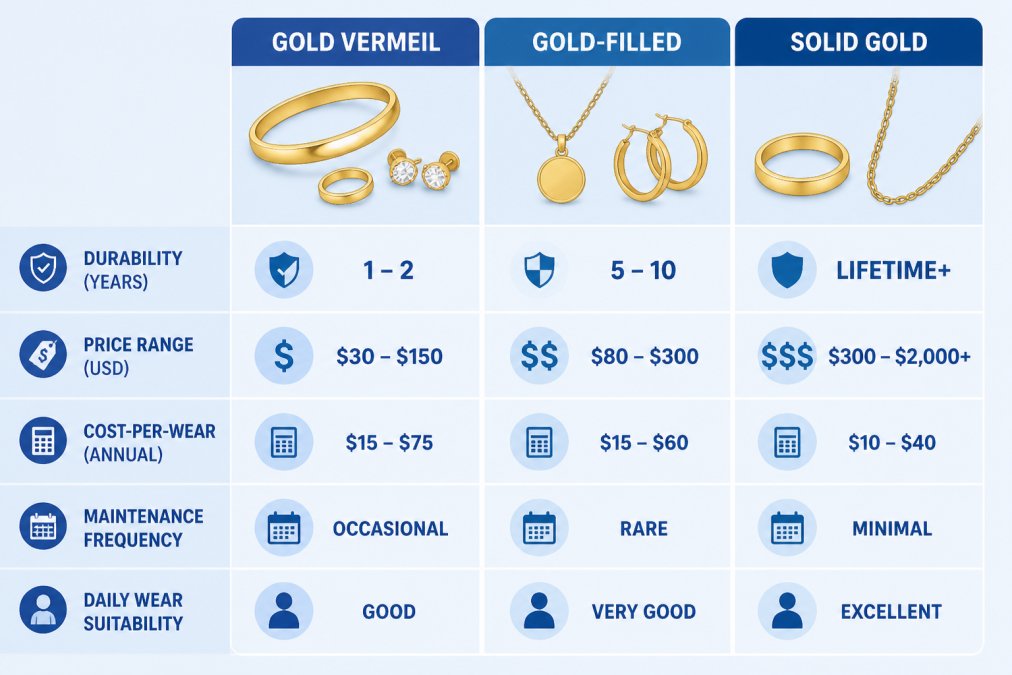
Durability expectations matter here. If you expect a piece to last 20 years, solid gold is the better investment. If you want to explore styles, experiment with colors, or own multiple pieces, vermeil delivers better value. The decision depends on your actual use and budget.
Is Gold Vermeil Worth Buying for Your Lifestyle
Understanding gold vermeil jewelry worth means recognizing that vermeil works best for specific lifestyles. If you wear jewelry occasionally for special events, vermeil is worth buying.
For daily-wear jewelry, vermeil requires honest assessment. A vermeil ring you wear constantly will show wear within months. A vermeil necklace worn over clothing lasts longer. Consider which pieces in your collection actually get daily use versus occasional wear.
Vermeil suits gift-giving perfectly. You can present quality, attractive jewelry without spending $300-500 on solid gold. The recipient gets something beautiful that will look good for 1-3 years. If they love the style, they can upgrade to solid gold later.
The lifestyle question also involves care commitment. If you're willing to remove jewelry before water exposure and store it properly, vermeil lasts longer.
At Omnia X, we recommend vermeil for customers who value style variety, appreciate quality construction, and understand the realistic lifespan. Our curated collections include pieces designed specifically for the way people actually wear jewelry.
Gold vermeil is worth buying when you match the material to your actual needs. For occasional wear, gift-giving, and style exploration, vermeil offers quality and beauty at accessible prices.
Frequently Asked Questions
How long does gold vermeil jewelry last with daily wear?
Gold vermeil typically lasts 1-3 years with daily wear, depending on care and wear intensity. The 2.5-micrometer gold layer will thin over time through friction, sweat, and contact with water or chemicals. Pieces worn occasionally or stored properly can last significantly longer.
Is gold vermeil better than gold-filled jewelry?
Gold vermeil and gold-filled jewelry serve different needs. Gold-filled has a thicker gold layer (typically 5% gold by weight) and lasts longer, 5-20 years with care. Gold vermeil costs less upfront but requires more frequent maintenance and replating. Choose gold vermeil for fashion pieces you enjoy short-term; choose gold-filled for heirloom-quality everyday jewelry you want to keep for decades.
How do I clean gold vermeil jewelry without damaging it?
Use warm water, mild soap, and a soft cloth to gently clean gold vermeil. Avoid harsh chemicals, abrasive scrubbers, and ultrasonic cleaners, which can strip the gold layer. Pat dry immediately after cleaning. Store pieces separately in a dry place to prevent tarnishing. Never soak in water for extended periods.
Can you wear gold vermeil jewelry every day?
Yes, but with realistic expectations. Gold vermeil is suitable for daily wear if you're mindful of exposure to sweat, water, perfume, and lotions. Remove it during swimming, showering, or exercise. The gold layer will fade faster with constant wear, but this is normal and expected. If durability is your priority, gold-filled or solid gold are longer-lasting alternatives, though they cost more.