
Table of Contents
- Why Jewelry Tarnishes: Causes and the Role of Humidity
- Best Anti-Tarnish Jewelry Boxes and Containers
- Does Silica Gel Prevent Jewelry Tarnish?
- Storing Sterling Silver vs Costume Jewelry
- How to Clean Tarnished Jewelry at Home
- DIY vs. Commercial Anti-Tarnish Products
- Conclusion: Build a Tarnish-Resistant Storage Routine
- Frequently Asked Questions
Last Updated: October 4, 2026
Why Jewelry Tarnishes: Causes and the Role of Humidity
Learning how to store jewelry to prevent tarnishing starts with one fact: tarnish is not dirt. It is a chemical change on the surface of the metal. At Omnia X, we have seen how fast a favorite piece can dull when it sits in the wrong place. So here is the simple version of the science before we get to the fixes.
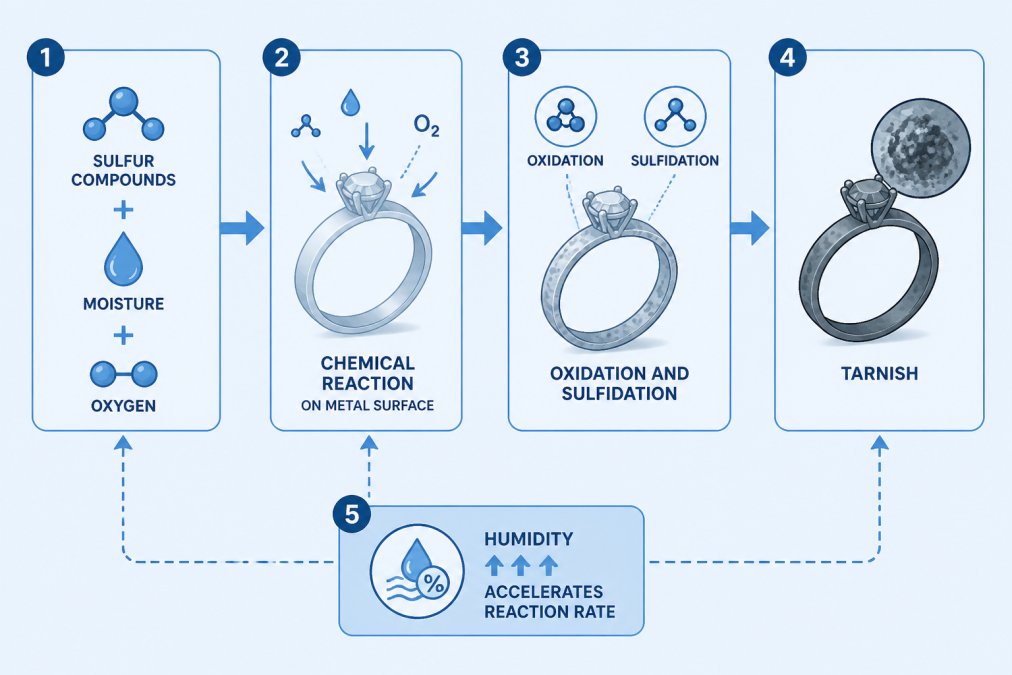
Tarnish forms when metal meets three things at once: sulfur compounds, moisture, and oxygen. The sulfur comes from the air, from rubber bands, and even from some fabrics. Humidity is the fuel that speeds the whole reaction up.
Sulfur Compounds and Oxidation
Oxidation is the reaction between metal and oxygen. It darkens the surface and steals the shine.
Silver is extra sensitive to sulfur, not just oxygen. When sulfur touches silver, the metal forms a dark layer called silver sulfide. This process is called sulfidation. The result is the brown or black film you see on old chains.
Air pollution, wool, and some paper products all release tiny amounts of sulfur. That is why a necklace can tarnish inside a drawer nobody opens.
How Moisture Accelerates Tarnishing
Water vapor is the accelerator. Damp air carries sulfur and oxygen to the metal faster than dry air does.
High humidity also invites corrosion on base metals like copper and brass. A steamy bathroom is the worst storage spot in the house. Steam from a shower coats everything in a thin film of water.
Best Anti-Tarnish Jewelry Boxes and Containers
The best anti-tarnish jewelry boxes share three traits: a tight seal, a chemically inert lining, and a place for each piece. A pretty box with a loose lid does almost nothing. Air gets in, and the reaction restarts.
Airtight Containers and Safe Linings
Airtight containers block the flow of air, sulfur, and moisture. Look for a rubber gasket or a snap seal, not just a lid that rests on top. But the material of the container itself matters as much as the seal.
Not all plastics are safe. Some release sulfur or plasticizers over time. Here is a quick guide to common storage materials:
| Material | Sulfur Risk | Moisture Risk | Verdict |
|---|---|---|---|
| Polypropylene (PP) | Low | Low | Safe for long-term storage |
| Polyethylene (PE) | Low | Low | Safe, but less rigid |
| Polyvinyl chloride (PVC) | High | Medium | Avoid, can release chlorides |
| Cardboard or paper | High | High | Avoid, sulfur from processing |
| Untreated wood | High | Medium | Avoid, natural acids and sulfur |
| Velvet (synthetic) | Low | Low | Safe if dry and clean |
| Cotton flannel | Low | Medium | Safe, but absorbs humidity |
| Microfiber | Low | Low | Safe and soft |
Velvet lining and microfiber pouches are soft, so they cut scratches. They also limit how much air touches the metal. Store each piece in its own pouch inside the sealed box.
One warning: some plastics and cardboard release sulfur over time. That is why a plastic bag from the kitchen is a poor choice. So is a shoebox.
Individual Compartments vs. Communal Storage
Individual compartments win for anything valuable. Separate slots stop chains from rubbing and keep sulfur from one piece away from the next. But the material of the dividers matters too. Felt dividers are common, but some felt is made from recycled fibers that may contain sulfur. Look for dividers made from acid-free, sulfur-free materials, or use individual pouches instead.
Communal storage is fine for cheap, sturdy items. But mixed piles cause tangles and scratches, and scratches open fresh metal to the air. That means more tarnish, faster.
| Storage Method | Air Exposure | Tangle Risk | Best For |
|---|---|---|---|
| Airtight box with compartments | Very low | Very low | Fine jewelry, silver |
| Velvet pouch per piece | Low | Low | Chains, pendants |
| Open dish or tray | High | Medium | Daily-wear pieces |
| Mixed communal pile | High | High | Sturdy costume pieces |
Does Silica Gel Prevent Jewelry Tarnish?
Yes, silica gel packets help prevent tarnish, but only as part of a sealed setup. Silica gel is a desiccant, meaning it pulls water vapor out of the air. Less moisture means a slower reaction.
How Desiccant Packs Work
Each packet absorbs moisture from the air around it. Drop one in a sealed box and the inside stays dry. But the gel has a limit. Once it is full, it stops working and needs replacing.
A few practical rules:
- Use one small packet per box, not per piece
- Replace packets every few months
- Keep the box sealed or the gel does nothing
- Never let the packet touch the metal directly
Using a Hanging Dehumidifier Bag for Closets
For a whole closet or wardrobe, a small packet is not enough. This is where a hanging dehumidifier bag earns its place. It absorbs excess moisture in the air and keeps the whole space drier.
Our Hanging Dehumidifier Bag for Closet and Wardrobe comes in 6-piece and 12-piece sets. You simply hang it on the provided hooks and let it work.

It contains calcium chloride, which turns into an alkaline liquid as it absorbs water. Keep it away from eyes and skin, and out of reach of children and pets. If contact happens, rinse with plenty of water.
Storing Sterling Silver vs Costume Jewelry
Sterling silver and costume jewelry need different care because they are made of different metals. Treating them the same is a common mistake, and it costs you shine. But the difference goes deeper than just "silver vs. base metal." The specific alloy and plating on costume jewelry determine how it tarnishes and how you should store it.
Sterling Silver: Sulfidation and Patina
Sterling silver is an alloy: 92.5% silver and 7.5% another metal, usually copper. The silver content is what makes it react to sulfur so easily.
Hanging Dehumidifier Bag for Closet and Wardrobe →
That dark layer is sulfidation, and it is not always bad. Some people like the soft, aged look called patina. But if you want bright silver, seal it away from air.
The fix is simple:
- Store silver in an airtight container with a polishing cloth
- Add a silica gel packet to the box
- Keep silver away from wool, rubber, and newspaper
- Wear it often, since skin oils can slow tarnish
But not all silver is the same. Fine silver (99.9%) tarnishes more slowly than sterling because it lacks copper. Coin silver (90%) tarnishes faster. If you have a mix, store the higher-copper pieces with extra care.
Costume Jewelry: Base Metals and Protective Coatings
Costume pieces are built on base metals like copper, brass, zinc, or nickel. Many carry a protective coating or rhodium plating to hold off tarnish. The coating is the weak point.
But different base metals behave differently:
| Base Metal | Tarnish Color | Main Trigger | Storage Note |
|---|---|---|---|
| Copper | Greenish-brown | Humidity, acids | Keep very dry; use silica |
| Brass (copper + zinc) | Dark brown to black | Sulfur, moisture | Similar to copper but slower |
| Zinc | White rust | Moisture only | Very humidity-sensitive |
| Nickel | Dull gray | Sulfur, sweat | Common in cheap alloys |
| Aluminum | White oxide | Oxygen, moisture | Rare in jewelry but possible |
So the storage strategy changes. Copper and brass need the driest environment you can create. Zinc is even more humidity-sensitive and can form white corrosion products. Nickel, often used as a base for plating, reacts to sweat and sulfur.
Plating types also matter. Rhodium plating is hard and resistant but can wear through. Gold plating over brass is common, but if the gold is thin, the brass underneath will tarnish at the edges first.
Here is how to tell them apart:
| Feature | Sterling Silver | Costume Jewelry |
|---|---|---|
| Base material | Silver alloy | Base metals |
| Main risk | Sulfidation | Coating wear and base metal oxidation |
| Best storage | Airtight box, anti-tarnish strip | Dry pouch, separate slot, silica |
| Cleaning | Polishing cloth | Soft, dry cloth only |
How to Clean Tarnished Jewelry at Home
You can remove light tarnish at home with a polishing cloth and a little patience. Start gentle, and only go stronger if you need to.
Follow these steps:
- Lay the piece on a soft towel.
- Wipe it with a dry polishing cloth using light pressure.
- For silver, use a silver dip only if the cloth fails.
- Rinse and dry fully, since any leftover moisture invites new tarnish.
- Store it right away in a sealed box.
A few things to avoid:
- Skip toothpaste and baking soda on plated pieces
- Never use paper towels, which can scratch
- Do not rub hard on gemstones or glued settings
For deeper grime, a jeweler can help. For everyday upkeep, a cloth and dry storage handle most cases.
DIY vs. Commercial Anti-Tarnish Products
DIY methods work for light cases, while commercial products win for long-term storage. The right pick depends on how much jewelry you own and how often you wear it.
DIY options:
- Anti-tarnish strips in a sealed box
- Silica gel packets to pull out moisture
- Chalk or activated charcoal as a cheap desiccant
Commercial options:
- Lined jewelry boxes with sealed lids
- Tarnish-resistant pouches and rolls
- Hanging dehumidifier bags for closets
Here is how we would choose:
| Your Situation | Best Pick | Why |
|---|---|---|
| A few pieces, worn daily | Velvet pouch plus cloth | Cheap and simple |
| A growing collection | Airtight box with strips | Blocks air and sulfur |
| A full closet or wardrobe | Hanging dehumidifier bag | Dries the whole space |
| Silver heirlooms | Sealed box plus silica gel | Slows sulfidation |
Conclusion: Build a Tarnish-Resistant Storage Routine
Tarnish is a reaction, not a life sentence. Control sulfur, moisture, and air, and your jewelry stays bright far longer. That means a sealed box, a desiccant pack, and a dry closet.
At Omnia X, we make that routine easy and affordable. Our Hanging Dehumidifier Bag for Closet and Wardrobe keeps damp air out of your storage space, and our curated jewelry collection gives you quality pieces at prices that make sense. Start with one sealed box and one dehumidifier bag, and protect the pieces you love.
Frequently Asked Questions
How do you store costume jewelry to prevent oxidation?
Store costume jewelry in an airtight container lined with a soft material like velvet or a microfiber pouch. Keep pieces separated in individual compartments to avoid scratches. Add silica gel packets to absorb moisture. Avoid storing in humid areas like bathrooms. This limits exposure to sulfur compounds and humidity that speed up oxidation on base metals.
Should jewelry be stored in airtight containers?
Yes, airtight containers are one of the best ways to prevent tarnishing. They block sulfur compounds and moisture from reaching the metal. Use containers with a rubber gasket or tight seal. For sterling silver, add anti-tarnish strips inside. For costume jewelry, line the container with a soft material to prevent scratches. Avoid plastic bags unless they are specifically made for jewelry storage.
Does humidity affect jewelry tarnishing?
Humidity accelerates tarnishing by speeding up the chemical reaction between metal and sulfur compounds. In damp environments, moisture acts as a catalyst. Use a dehumidifier bag in your closet or storage area to keep humidity low. Silica gel packets inside jewelry boxes also help. Aim for a dry, cool storage spot away from bathrooms or kitchens.
What are the best materials for anti-tarnish jewelry storage?
Look for containers lined with velvet, felt, or anti-tarnish fabric. Airtight boxes with rubber seals work well. For sterling silver, use anti-tarnish strips that absorb sulfur. Silica gel packets manage moisture. Avoid cardboard or paper, which can contain sulfur. Microfiber pouches are good for travel. Individual compartments prevent scratches and tangles.