
Table of Contents
- Why Gold Plated Jewelry Needs Special Care
- What You'll Need to Clean Gold Plated Jewelry
- Step-by-Step: How to Clean Gold Plated Jewelry
- The Best Jewelry Cleaning Solution for Gold Plated Pieces
- How to Prevent Gold Plated Jewelry from Tarnishing
- How to Store Gold Plated Jewelry
- When to Stop Cleaning and Seek Professional Restoration
- Final Care Tips for Lasting Shine
- Frequently Asked Questions
Last Updated: September 7, 2026
Why Gold Plated Jewelry Needs Special Care
Gold plated jewelry is a layer of gold bonded over a base metal like copper or brass, which means it needs gentler handling than solid gold pieces. The plating is measured in microns, and once that thin layer wears away or reacts with chemicals, the base metal underneath can tarnish, discolor, or irritate your skin. Aggressive scrubbing or harsh dips can strip the plating entirely, leaving a dull piece that cannot be restored at home.
Knowing how to clean gold plated jewelry correctly is about preserving that microscopic layer, not just removing dirt. The goal is always the gentlest method that works, because once the plating is gone, no amount of polishing will bring it back.
What You'll Need to Clean Gold Plated Jewelry
Before you start, gather these supplies so you are not tempted to reach for something abrasive mid-task:
- Lukewarm water in a small bowl, not hot water
- Mild dish soap without ammonia, bleach, or citrus additives
- Microfiber cloth or a soft cotton cloth
- Soft-bristled toothbrush for detail work around stones or crevices
- Clean, dry towel for blotting
What you should never use is just as important. Abrasive cleaners, polishing compounds, and ultrasonic cleaners are too aggressive for plated surfaces. Ammonia-based jewelry dips are designed for solid gold and will eat through thin plating quickly. If a cleaner is strong enough to remove tarnish instantly, it is strong enough to remove your gold layer.
Step-by-Step: How to Clean Gold Plated Jewelry
The entire process takes about five minutes and should be repeated only when the piece actually looks dirty, not on a fixed schedule.
- Mix the solution. Add a few drops of mild dish soap to a bowl of lukewarm water. Swirl gently until suds form.
- Dip and soak briefly. Submerge the jewelry for no more than 30 seconds. Prolonged soaking can weaken the bond between the plating and the base metal.
- Wipe gently. Use your fingers or a microfiber cloth to wipe the surface with light pressure. Do not rub hard, and do not scrape with your fingernails.
- Clean crevices. For textured areas or around any stones, use a soft-bristled toothbrush with small, circular motions. Keep the brush moving and avoid pressing down.
- Rinse thoroughly. Hold the piece under lukewarm running water to remove all soap residue. Leftover soap dulls the finish.
- Blot dry. Lay the jewelry on a clean, dry towel and pat it dry. Let it air dry completely before wearing or storing.
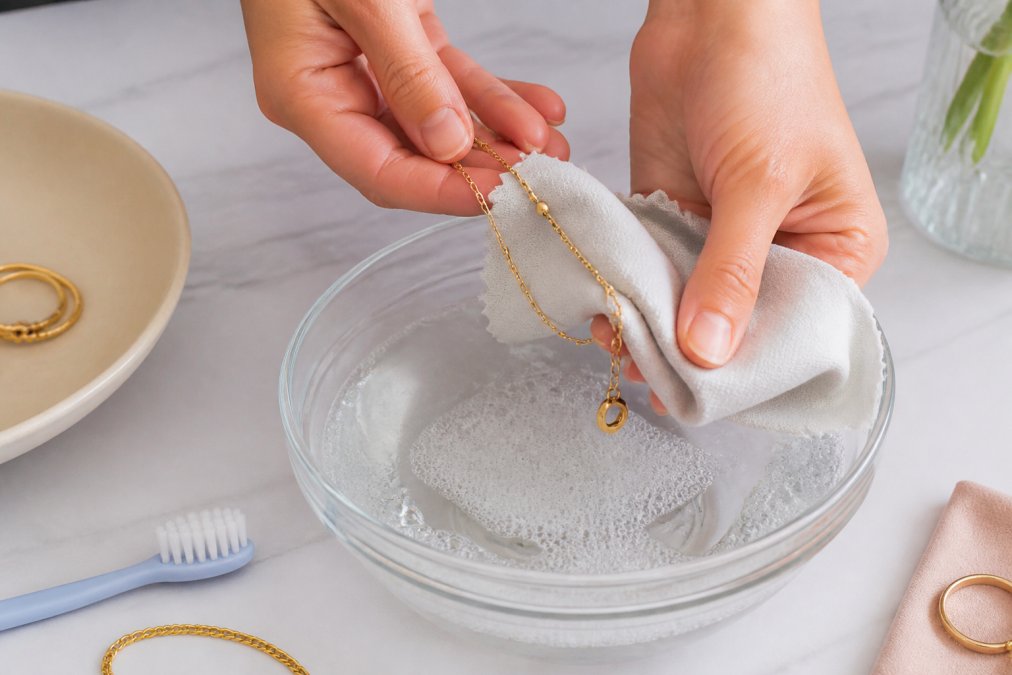
The most common mistake here is scrubbing. Gold plating is measured in fractions of a micron, and even a stiff toothbrush can create micro-scratches that accelerate future wear. When in doubt, wipe less and rinse more.
The Best Jewelry Cleaning Solution for Gold Plated Pieces
For gold plated jewelry, the best cleaning solution is a few drops of mild dish soap in lukewarm water. Understanding why this works, and why other solutions fail, requires a quick look at the chemistry involved.
The Chemistry of Damage
Gold plating is a thin layer of gold, typically 0.5 to 2.5 microns thick, bonded to a base metal like brass or copper (peer-reviewed research). The primary threats to this layer are:
- Ammonia: Found in many commercial jewelry dips, ammonia is a powerful complexing agent. It forms soluble complexes with gold ions. While this is safe for solid gold, on a plated piece, ammonia can literally pull gold atoms off the surface, thinning the plating with every use.
- Abrasives: Baking soda, toothpaste, and commercial polishing cloths contain microscopic abrasive particles. On a 1-micron gold layer, these particles act like sandpaper, creating micro-scratches that expose the base metal. Once exposed, the copper or brass underneath oxidizes rapidly, leading to the green or dark discoloration you see on skin.
- Acids: Vinegar and lemon juice are mildly acidic. While they won't dissolve gold, they can attack the base metal through microscopic pores in the plating, corroding it and lifting the gold layer from underneath.
Why Dish Soap is the Safe Default
Mild dish soap works through a simple mechanism: surfactants. These molecules have one end that binds to oils and dirt, and another that binds to water. When you soak the piece, the surfactants lift the grime off the surface without any chemical reaction with the gold or base metal. It is purely mechanical and entirely safe.
The Testing Gap: DIY vs. Commercial
Most guides tell you to avoid commercial dips, but they don't explain how to test a solution safely. Here is a practical, low-risk method:
- The 30-Second Patch Test: Mix a small amount of your chosen solution. Dip a cotton swab in the solution and gently rub it on an inconspicuous area, like the inside of a bracelet clasp or the back of a pendant. Wait 30 seconds. If the swab picks up a yellow or gold tint, the solution is dissolving your plating. Discard it immediately.
- The Foam Rule: Commercial foam cleaners are often safe because they are designed to cling to the surface and lift dirt without immersion. However, check the label for 'ammonia' or 'cyanide' (used in some industrial dips). If either is listed, do not use it on plated pieces.
- The pH Strip Test: If you want to be precise, use a standard pH strip. A safe cleaning solution for gold plated jewelry should be neutral (pH 6.5-7.5). Anything below 6 is acidic; anything above 8 is alkaline. Both extremes are risky for the base metal.
A Note on Gemstones and Glued Settings
If your gold plated piece has stones, the cleaning solution matters even more. Many fashion pieces use epoxy or cyanoacrylate glue to hold stones in place. Ammonia-based dips can break down these adhesives, causing stones to fall out. For these pieces, skip the soak entirely. Instead, dip a cotton swab in the soapy water, wring it out so it is damp but not wet, and gently wipe around the stone setting. Never submerge a piece with glued-in stones.
| Cleaning Method | Safe for Gold Plated? | Mechanism | Risk Level |
|---|---|---|---|
| Mild dish soap + warm water | Yes | Surfactant lift | Low |
| Ammonia-based dip | No | Dissolves gold ions | High |
| Baking soda paste | No | Abrasive scratching | High |
| Vinegar solution | No | Acid attacks base metal | Medium |
| Ultrasonic cleaner | No | Vibration loosens plating and glue | High |
| Commercial foam (ammonia-free) | Sometimes | Surfactant lift + mild solvent | Medium (test first) |
How to Prevent Gold Plated Jewelry from Tarnishing
Tarnish on gold plated jewelry usually is not the gold itself oxidizing, it is the base metal reacting through tiny pores or worn spots in the plating. Preventing that reaction is far easier than reversing it. The main culprits are moisture, sweat, and everyday chemicals found in cosmetics and perfume.
A few habits will extend the life of your plated pieces dramatically:
- Put jewelry on last. Apply perfume, lotion, and hairspray before you dress, then put on your jewelry so those products never contact the surface.
- Remove pieces before exercise. Sweat is salty and slightly acidic, and it will find its way through plating over time.
- Take rings off when washing hands. Soap and water trapped under a ring accelerate wear.
- Wipe after each wear. A quick pass with a dry microfiber cloth removes skin oils before they harden into a film.
How to Store Gold Plated Jewelry
Proper storage for gold plated jewelry is about controlling three variables: moisture, friction, and airborne chemicals. Most people store their jewelry in a single box or drawer, which is the fastest way to ruin a plated piece.
The Humidity Problem
Gold plating is not a sealed barrier. It is a porous layer with microscopic gaps. When humidity exceeds 60%, moisture penetrates these pores and reaches the base metal (nist.gov). Copper and brass oxidize quickly, creating a dark film that pushes up against the gold layer, causing it to blister and flake. The solution is a desiccant. Silica gel packets absorb ambient moisture. Place one or two in your jewelry container and replace them every three months.
The Sulfur Threat
Airborne sulfur compounds, from rubber bands, wool, certain woods, and even some cardboard, react with copper and silver in the base metal to form a dark sulfide tarnish. This is why you may see discoloration on a plated piece even if you have never worn it. Anti-tarnish strips contain activated carbon or silver nitrate that absorbs these sulfur gases before they reach your jewelry. One strip in a sealed container will protect pieces for up to six months. Do not use plain tissue paper; many types contain sulfur compounds that accelerate tarnishing.
The Friction Factor
Plated gold is soft. The gold layer itself is typically 18k or 24k, which is malleable. When two plated pieces rub against each other, the harder base metal of one piece can scratch the plating of the other. This is why compartmentalized storage is non-negotiable. If you do not have a compartmented box, wrap each piece individually in a soft, lint-free cotton cloth (not felt, which can contain dyes that react with metal). For chains, hang them individually or lay them flat in a straight line. Coiling them tightly creates stress points where the plating can crack.
The Wear-and-Tear Check: Clean vs. Restore
Storage is also the time to assess whether a piece needs cleaning or professional restoration. Before putting a piece away, inspect it under bright light:
- If you see a dull film but no color change: This is dirt and skin oils. A quick cleaning with mild soap and water is sufficient.
- If you see dark patches that do not wipe off: This is tarnish on the base metal, which means the plating has worn through in those spots. Cleaning will not fix this. You need re-plating.
- If you see flaking or peeling: The plating bond has failed. No cleaning method or storage trick will reverse this. Seek professional re-plating or replace the piece.
The Re-Plating Decision
When you notice worn spots, the question is whether to re-plate or replace. Re-plating involves an electrochemical process where a jeweler submerges the piece in a gold solution and applies a current to deposit a new layer (acs.org). This costs between $30 and $80 for a typical ring or pendant. It is worth doing if the piece has sentimental value or was originally high quality. For inexpensive fashion pieces (under $50), re-plating often costs more than replacement. A practical rule: if the base metal is still smooth and the piece is structurally sound, re-plating is viable. If the base metal is pitted or corroded, the piece is beyond repair.
When to Stop Cleaning and Seek Professional Restoration
Cleaning cannot fix every problem, and knowing when to stop is part of caring for gold plated jewelry. If you notice flaking, where the gold layer visibly peels away from the base metal, no home method will help. The same applies to dark patches that do not lift with gentle soap and water, or a green discoloration on your skin that indicates the plating has worn through completely.
In these cases, professional restoration is the right call. A jeweler can strip the remaining plating and re-plate the piece, which involves a new layer of gold applied electrochemically. Re-plating costs a fraction of replacing the piece and restores it to like-new condition, but it is only worth doing on pieces with sentimental or monetary value. For inexpensive fashion jewelry, replacement is often the more practical choice.
Final Care Tips for Lasting Shine
Gold plated jewelry can look beautiful for years, but it behaves like a rental, not a purchase. You are borrowing a thin layer of gold, and your habits decide how long it lasts. Keep cleaning sessions short, use only mild soap and water, dry pieces thoroughly, and store them separately with anti-tarnish protection.
The jewelry care advice in this guide applies whether you own one plated piece or a full collection. At Omnia X, we curate quality pieces, and we know that informed care makes every piece last longer. Check your pieces regularly for signs of wear, and address small issues before they become visible damage.
Frequently Asked Questions
How do you make gold-plated jewelry look gold again?
Gentle cleaning often restores the shine. Mix a few drops of mild dish soap into warm water, dip a soft microfiber cloth in the solution, and wipe the piece. Rinse with a separate damp cloth and pat dry. This removes the dulling layer of dirt and oxidation. If the base metal is showing through, the plating has worn away and cleaning won't help; professional re-plating is the only fix.
Is it safe to use jewelry cleaner on gold plated items?
Most commercial jewelry cleaners are too harsh for gold plated pieces. They often contain ammonia or abrasives that can strip the thin layer of gold, exposing the base metal. Ultrasonic cleaners are also risky because the vibrations can weaken the bond between the plating and the base. Stick to mild dish soap and warm water for routine cleaning.
How often should you clean gold plated jewelry?
Clean gold plated jewelry only when it looks dull or dirty, which is usually every few months with regular wear. Over-cleaning can wear down the plating faster than leaving it alone. Between cleanings, simply wipe the piece with a dry, soft cloth after each wear to remove skin oils and sweat, which are the main causes of tarnish.
How do you keep gold-plated jewelry from tarnishing?
The most effective way is to keep it dry and away from chemicals. Put your jewelry on last, after perfume, lotion, and hairspray have dried. Remove it before swimming, showering, or exercising. Store each piece in its own airtight pouch or box with an anti-tarnish strip. This limits exposure to air and moisture, which cause the base metal to oxidize.
Caring for gold plated jewelry comes down to gentle cleaning and smart prevention. Most damage happens not from wearing the pieces, but from harsh cleaning methods and poor storage. Omnia X offers quality merchandise at competitive prices, and we want every piece you buy from us to keep its shine for years. Browse our jewelry collection and start your pieces off with the right care routine.