
Table of Contents
- Quick Comparison: Best Sensitive Skin Jewelry Picks
- Hypoallergenic Jewelry Metals That Actually Work
- Signs of Jewelry Allergy You Should Not Ignore
- How Skin Acidity Affects Your Jewelry (and Vice Versa)
-
How to Clean Jewelry for Sensitive Skin
- Why Cleaning Matters More for Reactive Skin
- Material-by-Material Cleaning Protocols
- The Weekly and Monthly Routine
- Cleaning Plated and Coated Jewelry Without Ruining It
- What to Do When a Piece Starts Irritating You
- Storage That Protects Both the Metal and Your Skin
- Weekly and Monthly Maintenance Routine
- Budget-Friendly vs. Investment Pieces: What Lasts
- Top Picks from Omnia X for Sensitive Skin
- Conclusion
- Frequently Asked Questions
Last Updated: September 24, 2026
Quick Comparison: Best Sensitive Skin Jewelry Picks
Finding the best jewelry for sensitive skin types starts with one rule: avoid nickel, the most common cause of contact dermatitis from jewelry, which hides in the base metals of cheap rings, earrings, and necklaces. This guide breaks down which metals are safe, how to spot a reaction early, and which pieces are worth your money.
Quick Picks:
| Pick | Material | Price | Best For |
|---|---|---|---|
| Vadmans Frog Anxiety Ring | 925 sterling silver, nickel-free | $82.00 | Sterling silver lovers who want a hypoallergenic statement piece |
| Nanafast Rhombus Spinner Ring | Titanium stainless steel, nickel-free | $45.84 | Everyday wear with a comfort fit |
| Classic Stainless Steel Spinner Ring | Titanium steel | $12.97 | Budget buyers testing titanium steel |
| Elegant Adjustable Sparkle Ring | Adjustable fit | $1.65 | Gift-givers on a tight budget |
Hypoallergenic Jewelry Metals That Actually Work
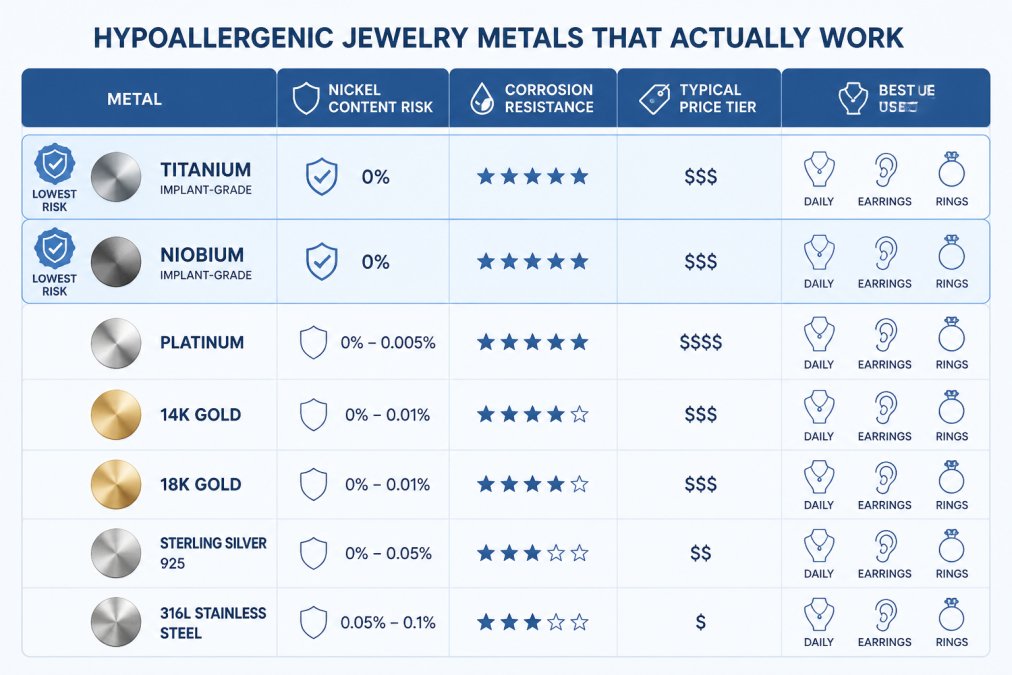
Hypoallergenic jewelry metals release little to no nickel or other irritants when they touch your skin. Titanium, niobium, platinum, and nickel-free sterling silver top that list. Karat gold and stainless steel can work too, but only when the alloy and coating are right.


Titanium, Niobium, and Platinum: The Safest Bets
Implant-grade titanium and niobium are the metals surgeons and piercers reach for when a body must tolerate a foreign object long-term. Titanium is lightweight, corrosion-resistant, and naturally nickel-free; niobium behaves the same way and takes color finishes without extra plating.
Gold, Silver, and Stainless Steel: What to Know
Karat gold is an alloy mixed with other metals. Higher karats like 18k contain more pure gold and fewer base metals, so they irritate less than 10k or 14k. Sterling silver is 92.5% silver and generally well tolerated when nickel-free, though it tarnishes and needs regular cleaning. Stainless steel is the wildcard: lower grades can contain nickel, but 316L resists corrosion and holds a polish.
Signs of Jewelry Allergy You Should Not Ignore
The telltale sign of a jewelry allergy is a red, itchy rash where the metal touches your skin, often within hours to a few days of wear. Dermatologists call this contact dermatitis; it usually shows up as dry patches, small bumps, or a burning sensation rather than an immediate reaction.
Watch for these signals:
- Redness or swelling under a ring or earring
- Itching that stops when you remove the piece
- Dry, flaky, or cracked skin at the contact point
- A rash that fades within a week of not wearing the item
- Skin darkening or a green tint on the skin
How Skin Acidity Affects Your Jewelry (and Vice Versa)
Skin acidity is the missing variable in most jewelry advice. Everyone's skin sits at a slightly acidic pH, typically 4.5 to 5.5, and some people run more acidic than others. That acidity reacts with base metals, speeding corrosion and pulling nickel and copper ions to the surface where they trigger reactions.
The Chemistry Behind Green Skin and Black Marks
The green tint people blame on "cheap metal" is copper oxidation, not an allergy. When copper in an alloy meets sweat, oxygen, and skin acids, it forms copper salts that deposit as a green or blue-black film. Silver reacts similarly, which is why sterling silver smudges on some wearers and not others.
Three factors drive how fast that happens:
- Skin pH. More acidic skin accelerates the reaction. People who describe themselves as having "acidic skin" are usually noticing this pattern, not a true metal allergy.
- Sweat composition. Sweat carries salt, urea, and lactic acid. Higher concentrations mean faster corrosion.
- Humidity and occlusion. A ring worn under gloves or a watch band traps moisture against the metal, keeping the reaction going for hours.
Oxidation vs. Allergy: How to Tell Them Apart
| Signal | Oxidation (green/black skin) | Contact allergy (nickel or cobalt) |
|---|---|---|
| Where it appears | Only where metal touches skin | Where metal touches skin, often spreading slightly beyond |
| Appearance | Green, blue-black, or gray film that washes off | Red, raised, itchy rash that does not wash off |
| Timing | Appears within hours of wear | Usually 12-72 hours after first contact |
| Goes away when jewelry is removed | Yes, within a wash | Yes, but takes several days to a week |
| Cause | Copper or silver salts | Immune reaction to nickel, cobalt, or chromium |
If your skin is only discolored and not itchy or raised, it is oxidation. If you have an itchy, bumpy rash that lingers after you remove the piece, that is contact dermatitis, stop wearing the metal entirely.
A Simple DIY Patch Test for Nickel Sensitivity
Dermatologists confirm nickel allergy with a patch test, but you can get a rough signal at home before spending money. This is a screening step, not a diagnosis.
- Clean a small patch of skin on your inner forearm with mild soap and water.
- Tape a nickel-containing coin (most modern US nickels qualify) or the jewelry in question against the skin.
- Cover it with a bandage and leave it for 24 to 48 hours without getting it wet.
- Remove the bandage and check the area. Redness, small bumps, or itching within 48 hours suggests sensitivity.
- If you react, treat all nickel-containing alloys as off-limits and look for implant-grade titanium, niobium, or nickel-free 925 sterling silver.
What This Means for Buying
If you notice green skin, dark smudges, or jewelry that wears out faster on you than on friends, your skin chemistry is likely more reactive. Skip plated base metals and choose corrosion-resistant alloys from the start.
How to Clean Jewelry for Sensitive Skin
Cleaning jewelry for sensitive skin means removing buildup without stripping protective coatings. The wrong cleaner can dissolve rhodium plating, dull a PVD finish, or leave residue that traps irritants against your skin. The right routine depends on the material.
Why Cleaning Matters More for Reactive Skin
Every time you wear a ring or earring, it collects a film of skin oils, dead cells, lotion, sunscreen, and sweat. On sensitive skin, that film holds allergens like nickel ions against the skin longer and traps moisture that accelerates corrosion. A piece that is safe when clean can become irritating when dirty, even if the alloy has not changed.
Elegant Adjustable Sparkle Ring →
Material-by-Material Cleaning Protocols
| Material | Safe method | Avoid |
|---|---|---|
| Implant-grade titanium | Warm water, mild dish soap, soft brush | Abrasive polishes, chlorine |
| Niobium | Warm water, mild soap, soft cloth | Ultrasonic cleaners, ammonia |
| Platinum | Mild soap and water, soft cloth; professional polish as needed | Chlorine, bleach, abrasive pads |
| 925 sterling silver (nickel-free) | Silver polishing cloth, mild soap and water | Rubber bands, sulfur-containing cleaners |
| 14k-18k gold | Mild soap and water, soft brush | Chlorine, harsh detergents |
| 316L stainless steel | Mild soap and water, soft brush | Chlorine, abrasive scrubbers |
| Rhodium- or PVD-plated pieces | Soft dry cloth after each wear; occasional mild soap | Ultrasonic cleaners, polishing compounds, repeated scrubbing |
The Weekly and Monthly Routine
A quick weekly wash takes about two minutes per piece. Use a soft-bristled brush on textured rings, then rinse and pat dry. Once a month, inspect the inner band, clasp, and any area that sits against skin for signs of wear.
- Remove jewelry before showering, swimming, or applying lotion
- Wipe pieces with a soft dry cloth after each wear
- Wash weekly with a drop of mild dish soap and warm water
- Dry completely before storing, since moisture drives oxidation
- Store each piece separately in a soft pouch or lined box
- Check plating and coatings monthly for thinning or flaking
- Retire any piece where the base metal is visibly exposed
Cleaning Plated and Coated Jewelry Without Ruining It
Rhodium plating and PVD coatings are the barrier between your skin and the alloy underneath, and the most fragile part of a piece. Ultrasonic cleaners, ammonia-based silver dips, and abrasive polishes break that barrier down faster than normal wear.
What to Do When a Piece Starts Irritating You
If a piece you have worn comfortably for months suddenly causes itching or redness, the cause is usually one of three things: the coating has worn through, residue has built up, or your skin has become sensitized after repeated exposure. Nickel allergy can develop over time, so a ring that was fine last year is not guaranteed to be fine next year.
Try this sequence before giving up on the piece:
- Clean it thoroughly with mild soap and warm water, then dry it completely.
- Stop wearing it for a week and see if the rash clears.
- If the rash returns when you wear it again, the metal is the problem, not the cleanliness.
- Move the piece to a different finger or wear it over a barrier (like a clear nail polish coat on the inner band, which is a temporary fix, not a permanent one).
- If irritation continues, retire the piece and replace it with a solid, unplated metal.
Storage That Protects Both the Metal and Your Skin
Store pieces dry and separated. Moisture left after washing is the leading cause of tarnish and surface oxidation, and pieces kept in a humid bathroom cabinet degrade faster than those in a dry drawer. Anti-tarnish strips and lined boxes help, but the biggest factor is never storing anything wet.
Weekly and Monthly Maintenance Routine
A quick weekly wash takes about two minutes per piece. Use a soft-bristled brush on textured rings, then rinse and pat dry. Once a month, do a closer inspection: look at the inner band, the clasp, and any area that sits against skin for signs of wear.
Budget-Friendly vs. Investment Pieces: What Lasts
Budget pieces can work for sensitive skin if you pick the right material. A titanium steel ring at $12.97 delivers the same nickel-free, corrosion-resistant surface as a designer version at ten times the price; the difference is finish, weight, and coating lifespan.
| Factor | Budget Pieces ($10-$50) | Investment Pieces ($70+) |
|---|---|---|
| Typical material | Titanium steel, 316L stainless steel | 925 sterling silver, platinum, 18k gold |
| Plating risk | Higher, coatings can flake | Lower, often solid metal |
| Lifespan | 1-3 years with care | 10+ years with care |
| Best for | Testing a style, gifts, everyday wear | Heirloom pieces, daily signature rings |
Top Picks from Omnia X for Sensitive Skin
Omnia X curates jewelry at prices that make trying a new material low-risk, built around metals that suit sensitive skin, from nickel-free sterling silver to titanium steel.
Conclusion
Picking jewelry for reactive skin comes down to three decisions: choose a nickel-free metal, keep it clean, and know when a piece has worn past the point of safety. Titanium, niobium, platinum, and 925 sterling silver cover nearly every budget and style.
Frequently Asked Questions
What jewelry material is best for sensitive skin?
Implant-grade titanium and niobium are the safest choices because they contain no nickel and resist corrosion. Platinum and 14k or 18k gold also work well for most people with metal sensitivity. Sterling silver and 316L stainless steel are good mid-range options, though some stainless steel alloys may still contain trace nickel. Always check that a piece is labeled nickel-free and hypoallergenic before buying. If you have a known nickel allergy, avoid brass, copper, and cheap gold plating entirely.
How can I tell if my jewelry contains nickel?
The most reliable at-home test is a nickel detection kit, which uses a chemical solution that turns pink when it contacts nickel. You can also watch for telltale signs: if a piece turns your skin green or causes itching within hours of wearing it, nickel or copper is likely present. A dermatologist can confirm a nickel allergy with a patch test. For new purchases, look for labels that explicitly state nickel-free, lead-free, or hypoallergenic, and avoid vague terms like gold-tone or fashion metal.
Is 14K or 18k gold better for sensitive skin?
Both 14k and 18k gold are generally safe for sensitive skin because they are precious metal alloys with high gold content. The difference is in the remaining alloy metals. 18k gold contains 75% pure gold, while 14k contains about 58%. The non-gold portion in either can include nickel, though many jewelers now use nickel-free alloys. If you have a severe nickel allergy, ask the seller specifically which metals are in the alloy. 18k gold is not automatically safer than 14k; it depends on the specific alloy used.
Can I wear gold-plated jewelry if I have sensitive skin?
Gold-plated jewelry can work for sensitive skin if the base metal is nickel-free and the plating is thick enough not to wear through quickly. The problem is that most affordable gold-plated pieces use a brass or copper base, both of which can irritate skin once the thin gold layer wears off. PVD coating is a more durable alternative that resists tarnishing and reduces base metal leaching. If you love the gold look but have reactions, gold vermeil over sterling silver is a better option than standard plating.
How often should I clean jewelry for sensitive skin?
Clean jewelry worn daily at least once a week with mild dish soap and warm water. Use a soft-bristled brush to reach crevices where skin oils and product residue collect. Rinse thoroughly and dry with a lint-free cloth. For pieces worn less often, a monthly clean is enough. Sterling silver benefits from a polishing cloth between washes to prevent tarnish, which can irritate sensitive skin. Avoid harsh chemicals, bleach, and ultrasonic cleaners on plated or stone-set pieces.